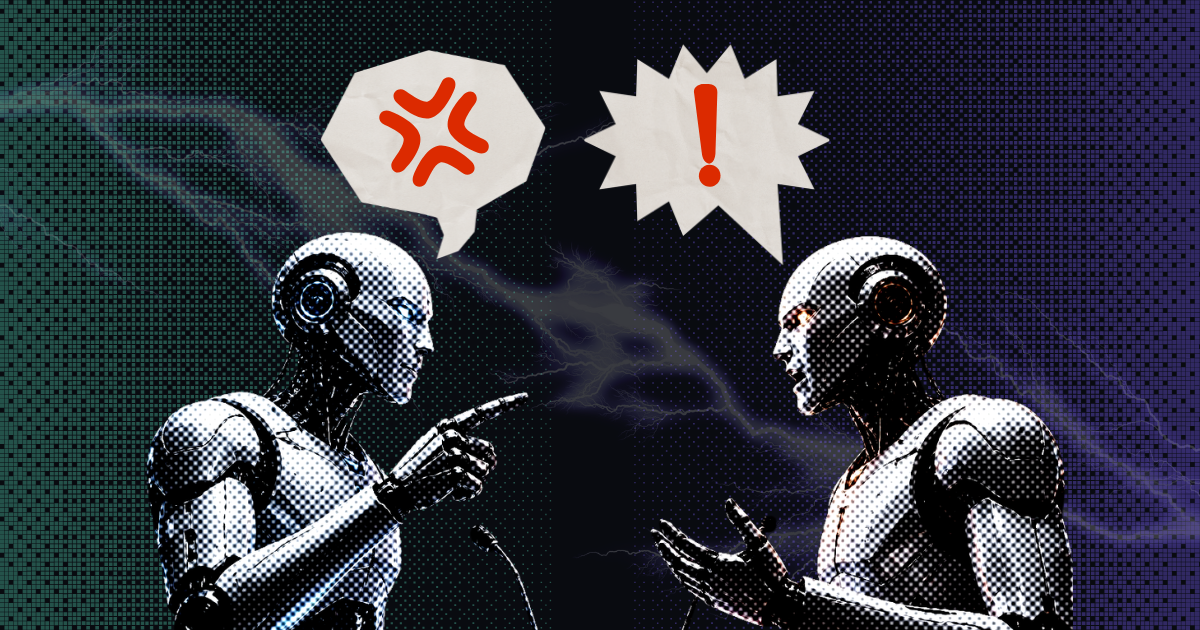
One agent says the work is finished, another starts it again, and a third confidently acts on a decision you already reversed.
This happens because each agent is working from a different copy of reality. Fulcra gives every connected agent one user-owned context backend where data, decisions, files, and agent work can remain current and available to the agents that need them.
Every agent has its own instructions, files, tools, and retained state. Your coding agent may know that an interface changed, while your research agent still has the old specification and your planning agent continues assigning work that depends on it.
Each answer can make sense given the context that agent received, even though the agents collectively contradict one another. A better model will merely reason more convincingly from stale inputs.
Separate state also causes duplicated work because an agent that finishes a competitor brief inside its own workspace has not made that result discoverable to the others. Another agent begins the same research, two coding agents fix the same issue, or one agent overwrites work that it did not know existed.
Files such as AGENTS.md and CLAUDE.md are useful for stable instructions about testing, conventions, and permissions. Work status, new findings, and changing decisions move too quickly for files copied across several agents, and every additional copy creates another version that can fall behind.
Coordination requires shared state that every agent can read, update, and check for changes.
Agents need one place to find current facts, decisions, work status, and outputs from other agents, together with a way to discover what has changed since they last looked. Without that change check, every run must either reread the complete history or trust whatever context happens to be available.
A recurring agent should begin by checking what arrived since its previous successful run, retrieve the relevant records or files, do its work, and write back the result for whoever comes next. Sources, timestamps, and statuses make conflicting claims visible, so they can be resolved instead of silently copied through the system.
A queue remains necessary when agents need exclusive task claims, strict ordering, or exactly-once execution. The queue governs who performs the work; shared context gives everyone involved the same facts about that work.
https://docs.fulcradynamics.com/agent-get-started.txt into it and asking it to follow the instructions.get_data_updates at the beginning of its run, using its previous successful watermark, and then retrieve only the records or files that changed.
Will using the same model stop agents from disagreeing? Agents running the same model can still receive different files, memories, and tool results, which means identical reasoning can produce contradictory answers from different inputs.
Is disagreement between agents useful? Disagreement can be useful when two agents interpret the same current evidence differently. It becomes a coordination failure when they appear to debate one question while unknowingly working from different versions of the facts.
Paste https://docs.fulcradynamics.com/agent-get-started.txt into two agents, connect both to the same context, and have each begin its next run by asking what changed.

Fulcra was designed by people who get privacy and know the importance of an infrastructure solution that can be the secure private datastore for the rest of your life. Here data is yours, under your control, and only shared with the people and tools you choose to share it with.



.png)