
Sleep isn’t one thing — it’s a cycle of distinct stages, each with a critical role in recovery, memory, and health. Learn how light, deep, and REM sleep work, and how environmental factors like temperature, light, and noise determine how much of each you get.

Every night, your body cycles through distinct sleep stages multiple times. Each stage serves a different purpose, and the balance between them determines how restored you feel in the morning.
The transition phase and the stage where you spend most of your night. Light sleep supports memory consolidation, motor learning, and metabolic regulation. It typically makes up 50-60% of total sleep.
The physically restorative stage. Deep sleep is when your body repairs tissue, strengthens the immune system, and releases growth hormone. Most deep sleep occurs in the first half of the night.
The mentally restorative stage. REM is critical for emotional processing, creative problem-solving, and long-term memory formation. REM periods get longer through the night, with most occurring in the second half.
Your core body temperature needs to drop 1-2°F to initiate sleep. A cool bedroom (65-68°F) supports deeper sleep and more complete sleep cycles. Heat disrupts deep sleep disproportionately.
Even small amounts of light suppress melatonin production and delay sleep onset. Blue light from screens is particularly disruptive. Morning sunlight exposure helps calibrate your circadian rhythm.
Intermittent noise is more disruptive than constant sound. White noise can mask disturbances. Humidity between 30-50% supports comfortable breathing and uninterrupted sleep cycles.
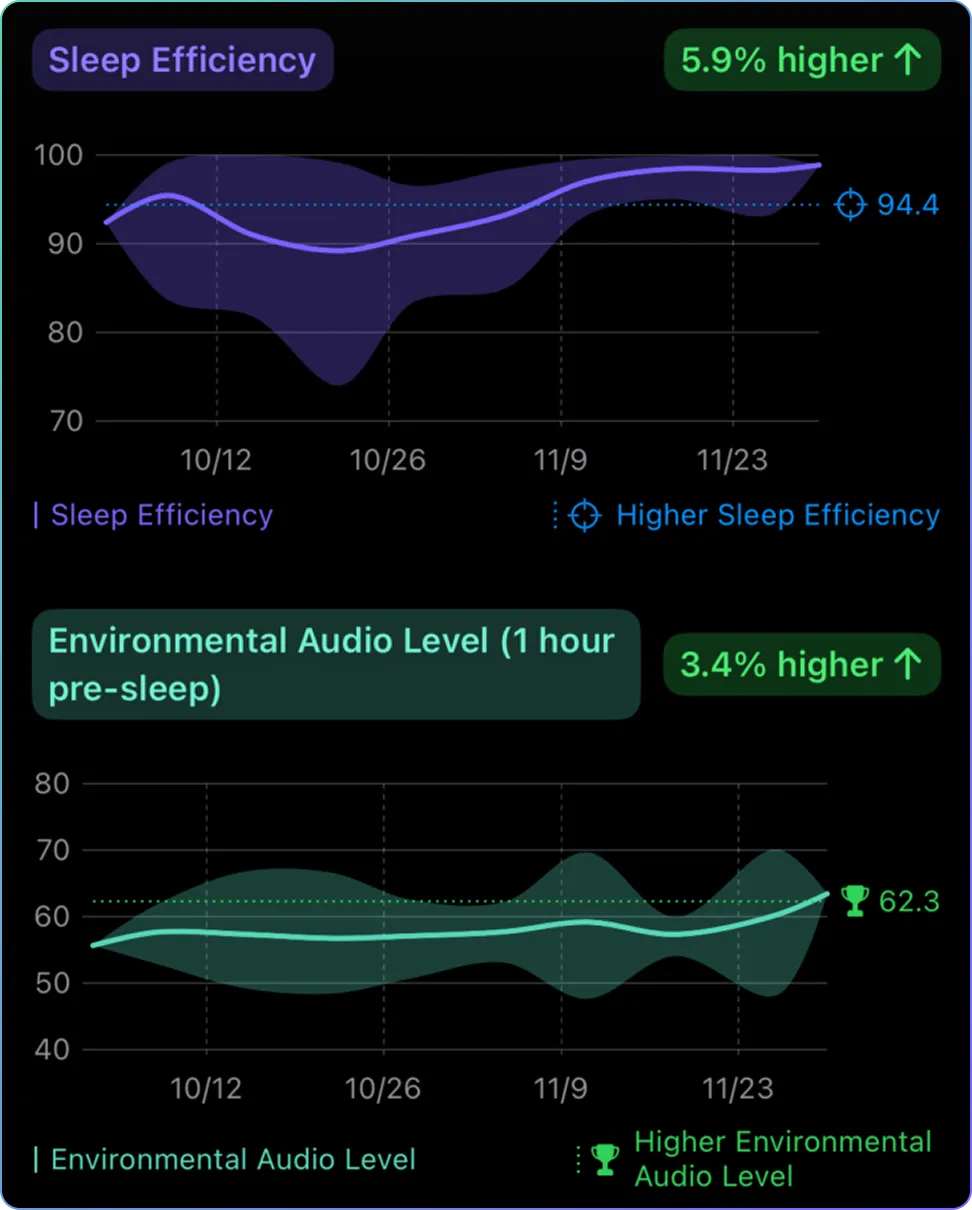
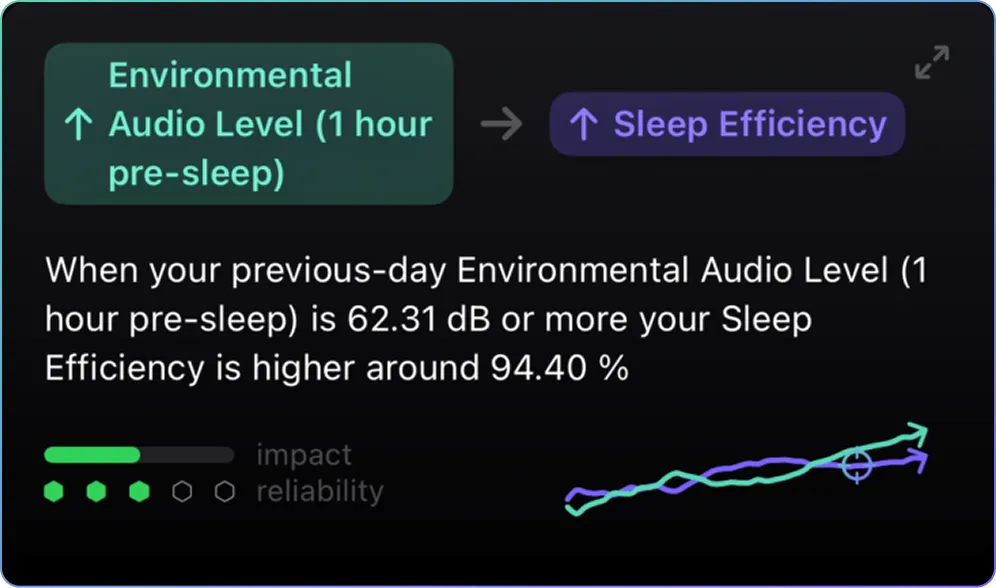
Fulcra aggregates sleep stage data from your wearable — Oura, Apple Watch, Whoop, Garmin, and more — into a unified timeline. Use annotations to log environmental changes (new mattress, blackout curtains, temperature adjustments) and let the AI identify which changes actually improved your sleep architecture.

Fulcra was designed by people who get privacy and know the importance of an infrastructure solution that can be the secure private datastore for the rest of your life. Here data is yours, under your control, and only shared with the people and tools you choose to share it with.
